Real-Time Monitoring and Predictive Maintenance: How IIoT is Revolutionizing CNC Machining Operations
The Digital Transformation of Precision Manufacturing
The global manufacturing landscape is undergoing a fundamental shift. With unplanned downtime costing industrial manufacturers an estimated $50 billion annually in the United States alone , the imperative for intelligent maintenance strategies has never been more critical. For CNC machining operations—whether focused on aluminum components, precision milling, or complex multi-axis manufacturing—the integration of Industrial Internet of Things (IIoT) technologies represents not merely an operational upgrade, but a competitive necessity.
The CNC machine monitoring software market, valued at $238 million in 2024, is projected to reach $352 million by 2032, growing at a CAGR of 5.8% . This growth trajectory reflects a broader industry recognition: traditional reactive maintenance models are economically unsustainable in an era of tightening margins and escalating customer demands for CNC precision.

The Architecture of Smart CNC Monitoring
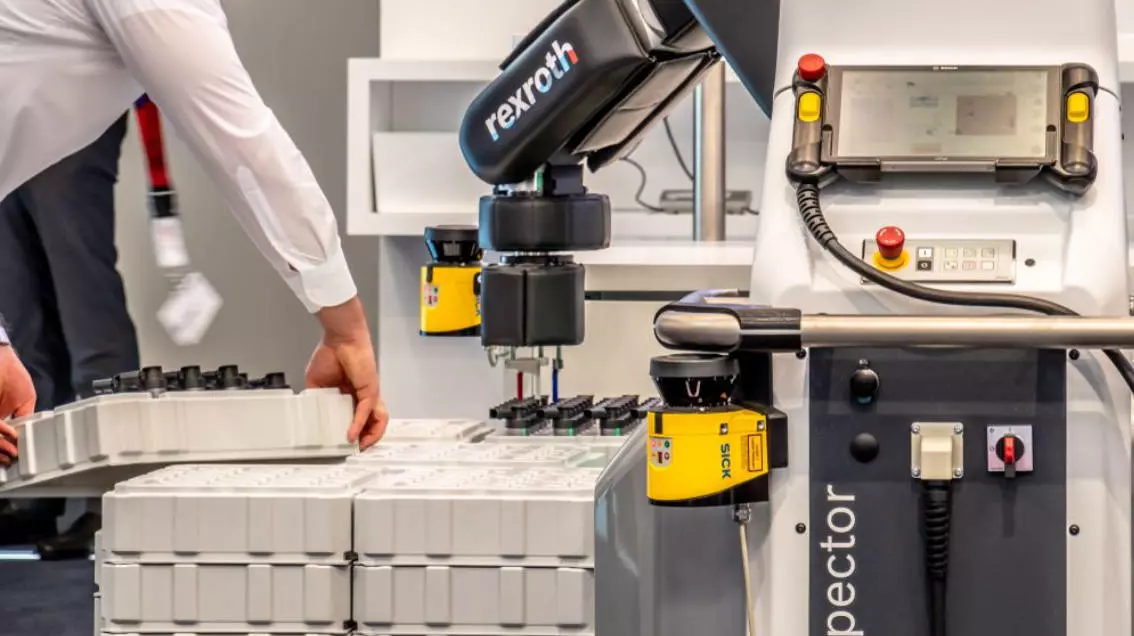
Modern CNC Service providers are increasingly deploying comprehensive sensor networks across their machining centers. These IIoT ecosystems capture multi-dimensional operational data in real-time:
Thermal Monitoring: Spindle temperature fluctuations often precede bearing failures by 1-3 weeks. Advanced CNC machines now integrate thermocouples and infrared sensors that track thermal signatures with ±0.1°C accuracy, enabling operators to detect lubrication breakdowns or cooling system inefficiencies before they compromise CNC precision.
Vibration Analysis: Accelerometers mounted on spindle housings and axis drive systems capture vibration spectra across frequency ranges. Machine learning algorithms can detect anomalous patterns indicating tool wear, imbalance, or impending mechanical failure. Industry data indicates that bearing failures typically show increasing vibration signatures 2-6 weeks before catastrophic failure occurs .
Tool Load Monitoring: Real-time power consumption monitoring and spindle load analysis enable dynamic optimization of cutting parameters. For aluminum CNC machining applications—where material properties can vary significantly between batches—this capability ensures consistent surface finish while maximizing material removal rates.
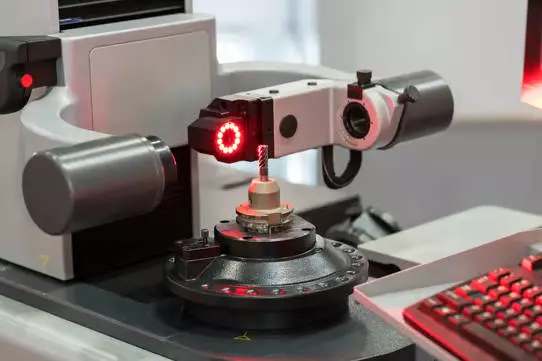
Dimensional Accuracy Tracking: In-process probing and laser measurement systems feed continuous data streams regarding workpiece geometry, enabling immediate compensation for thermal drift or tool deflection.
From Data to Action: The Predictive Maintenance Workflow
The transformation from raw sensor data to actionable maintenance intelligence follows a structured pipeline that defines modern CNC import and domestic manufacturing excellence:
Edge Computing Layer: Rather than transmitting all data to cloud servers, modern CNC monitoring systems employ edge computing gateways to process high-frequency sensor streams locally. This architecture reduces latency to sub-millisecond levels—critical for real-time process control—while minimizing bandwidth requirements. Edge devices can trigger immediate machine stops when catastrophic failure signatures are detected, preventing collateral damage to precision components.
Cloud Analytics Platform: Aggregated data from multiple CNC milling centers feeds centralized analytics engines where historical patterns are correlated with failure events. These platforms employ Long Short-Term Memory (LSTM) neural networks and other machine learning architectures to develop equipment-specific degradation models.
Digital Twin Integration: Leading manufacturers now deploy digital twin technology—virtual mirror models of physical CNC assets that simulate component wear and process deviations in real-time. This capability enables "what-if" scenario testing for maintenance scheduling without disrupting active production.
Automated Work Order Generation: Integration with Computerized Maintenance Management Systems (CMMS) ensures that predictive alerts automatically generate maintenance tickets, parts requisitions, and technician assignments. This closed-loop system eliminates the communication gaps that traditionally plague maintenance operations.
Quantifying the Business Impact: ROI Realities
The financial case for predictive maintenance in CNC machining environments is compelling and well-documented. Manufacturers implementing comprehensive IIoT monitoring programs consistently report:
Downtime Reduction: Unplanned downtime decreases by 35-45% on average, with some automotive parts manufacturers achieving 73% reductions across 400-machine fleets . For high-volume CNC service operations where downtime costs can exceed $125,000 per hour , these reductions translate directly to bottom-line impact.
Maintenance Cost Optimization: Predictive strategies deliver 25-30% reductions in overall maintenance costs compared to preventive schedules, and up to 40% savings versus reactive approaches . These savings derive from eliminating unnecessary scheduled maintenance, reducing emergency parts procurement premiums, and optimizing labor deployment.
Equipment Lifespan Extension: By identifying and addressing incipient failures before they cascade into secondary damage, predictive maintenance extends CNC machine tool life by 20-30% . For capital-intensive five-axis machining centers representing investments of $500,000+, this extension defers significant replacement capital.
Return on Investment Timeline: While implementation costs for a 100-machine deployment typically range from $80,000 to $200,000 , payback periods average 12-18 months. Critically, 95% of companies implementing predictive maintenance report positive returns, with 27% achieving full payback within 12 months .

Sector-Specific Applications: Aluminum and Aerospace CNC Machining
The aluminum CNC machining sector—projected to maintain steady growth with increasing demand from electric vehicle battery housings and lightweight structural components —presents unique monitoring challenges and opportunities. Aluminum's high thermal conductivity and relatively low modulus of elasticity make it susceptible to dimensional variation during high-speed machining operations.
IIoT-enabled adaptive control systems address these challenges by:
l Real-time spindle thermal compensation: Monitoring temperature gradients across the machine structure and automatically adjusting toolpath parameters to maintain tight tolerances on aluminum aerospace components requiring IT6-level precision .
l Chip load optimization: Continuous analysis of spindle power consumption enables dynamic feed rate adjustments that maximize material removal rates while preventing tool overload—a critical capability when machining expensive aluminum billet stock.
l Surface quality prediction: Correlation of vibration signatures and cutting parameters with post-process inspection data enables in-process prediction of surface finish quality, reducing scrap rates in high-value applications.

Successful IIoT deployment in CNC machining environments requires disciplined phasing:
Phase 1: Critical Asset Pilot (Months 1-8) Select 15-25 high-value CNC machines with established failure histories. Focus on assets with downtime costs exceeding $70,000 per hour or significant safety risks . Deploy vibration and temperature monitoring with basic threshold alerting to demonstrate immediate value through 3-5 documented failure preventions.
Phase 2: Data Infrastructure Development (Months 6-12) Establish robust data pipelines and begin training machine learning models. This period requires patience—predictive algorithms typically need 6-12 months of operational data to achieve reliable accuracy . Concurrently, integrate monitoring systems with existing ERP and MES platforms to enable seamless workflow automation.
Phase 3: Fleet-Wide Deployment (Months 12-24) Scale monitoring to full CNC machine populations, implementing tiered strategies based on asset criticality. High-value five-axis centers receive comprehensive sensor suites; simpler three-axis mills may utilize cloud-based monitoring with minimal edge infrastructure.
Phase 4: Advanced Analytics Maturity (Ongoing) Implement prescriptive maintenance capabilities that not only predict failures but recommend optimal maintenance actions and timing based on production schedules, parts availability, and cost optimization models.
The Human Element: Change Management Considerations
Technology implementation represents only half the challenge. Organizational transformation—particularly shifting maintenance culture from intuition-based to data-driven decision-making—requires substantial investment. Industry best practices suggest allocating 30-40% of implementation budgets to training and change management . Maintenance technicians require 40-80 hours of training to effectively interpret predictive alerts and transition from reactive troubleshooting to proactive intervention.
Leadership must establish trust in algorithmic predictions through transparent validation processes. Early wins—documented cases where predictive alerts prevented catastrophic failures—build the credibility necessary for cultural adoption.

The Competitive Imperative
As the global predictive maintenance market accelerates toward $47.8 billion by 2029 , CNC machining operations face a bifurcating competitive landscape. Early adopters of IIoT-enabled predictive maintenance are capturing significant advantages: 10:1 to 30:1 ROI ratios, 40% maintenance cost reductions, and the operational agility to guarantee delivery commitments that reactive competitors cannot match .
For procurement professionals evaluating CNC import partners or domestic CNC precision suppliers, IIoT maturity should rank as a critical selection criterion. Manufacturers with transparent monitoring capabilities offer not just components, but supply chain resilience—a increasingly valuable commodity in volatile markets.
The question is no longer whether IIoT-enabled predictive maintenance belongs in your CNC machining strategy, but how quickly you can scale from pilot implementation to enterprise-wide competitive advantage. In an industry where $1.4 trillion is lost annually to unplanned downtime across global manufacturing , the cost of inaction far exceeds the investment required for transformation.
Ready to optimize your CNC machining operations with intelligent monitoring solutions? Contact our engineering team to discuss how our IIoT-enabled manufacturing capabilities can enhance your supply chain reliability and component quality consistency.
