Open Ecosystems vs. Technology Sovereignty: The Dual Forces Reshaping Global CNC Manufacturing
The global CNC machine tools market stands at a critical inflection point. Valued at approximately USD 97.20 billion in 2024, the industry is projected to nearly double to USD 196.00 billion by 2034, expanding at a compound annual growth rate (CAGR) of 7.50% . Yet beneath these impressive figures lies a fundamental tension that will define the next decade of manufacturing: the clash between open architectural ecosystems that democratize innovation and the accelerating push for technological sovereignty in strategic markets.

The Open Architecture Revolution
For decades, proprietary CNC systems dominated the landscape, with industry giants like FANUC, Siemens, and Mitsubishi maintaining tight control over both hardware interfaces and software environments. This closed approach created formidable barriers to entry, locking manufacturers into expensive ecosystems and stifling innovation from external developers.
Today, a paradigm shift is underway. Forward-thinking CNC machining providers are embracing open architecture systems that expose hardware interfaces and software APIs to third-party developers. This transition mirrors the transformation witnessed in enterprise software and mobile computing, where openness catalyzed explosive innovation.
The business case for open CNC ecosystems is compelling. Manufacturers utilizing open-architecture controllers report 30-40% reductions in integration costs when deploying custom automation solutions. By allowing third-party developers to create specialized applications—from advanced AI-driven toolpath optimization to industry-specific HMI (Human-Machine Interface) enhancements—machine builders can extend their platforms' capabilities without bearing full R&D burdens.
Consider the implications for CNC milling operations. Traditional closed systems require operators to navigate proprietary, often outdated interfaces when programming complex aluminum components for aerospace or automotive applications. Open systems, conversely, enable software developers to create intuitive, AI-powered programming assistants that integrate seamlessly with CAD/CAM workflows. These innovations reduce setup times by up to 50% for complex geometries while maintaining the CNC precision tolerances—often within ±0.005mm—that critical applications demand.
The ecosystem approach also addresses the growing skills gap plaguing manufacturing sectors globally. By lowering the barrier to creating user-friendly applications, open platforms attract talent from the broader software development community rather than relying solely on specialized CNC programmers. This democratization is essential as the industry confronts a projected shortage of 2.4 million skilled manufacturing workers in developed economies by 2030.

The Counter-Current: Technology Sovereignty and Supply Chain Security
While openness drives innovation, parallel forces are pushing toward technological self-reliance. In key manufacturing powerhouses, particularly across Asia, governments and industry leaders are accelerating efforts to reduce dependence on foreign CNC import for high-end systems. This isn't mere protectionism—it reflects hard-learned lessons from supply chain disruptions and geopolitical tensions that exposed vulnerabilities in critical manufacturing infrastructure.
China's trajectory exemplifies this shift. Once dependent on imported high-precision machine tools from Germany, Japan, and Taiwan, Chinese manufacturers have made remarkable strides in domestic capability. Government initiatives aligned with strategic manufacturing roadmaps have channeled substantial investment into developing indigenous CNC service capabilities and core controller technologies. The results are measurable: domestic brands now capture significant market share in mid-range machining centers, though high-precision five-axis systems remain a focus of intensive development.
This localization trend extends beyond China. India's "Make in India" initiative, South Korea's manufacturing innovation programs, and similar strategies across Southeast Asia reflect a global recognition that control over precision manufacturing infrastructure constitutes strategic economic security. For international buyers, this creates a more complex sourcing landscape. While traditional European and Japanese CNC import channels remain premium options, emerging domestic alternatives offer competitive capabilities at attractive price points, particularly for standard CNC machining applications.
Navigating the Convergence: Strategic Implications for Manufacturers
The most successful manufacturing enterprises will be those that strategically navigate both trends—leveraging open ecosystems for operational agility while maintaining supply chain resilience through diversified sourcing.
For procurement professionals evaluating CNC service partners, several evaluation criteria emerge. First, assess the architectural openness of proposed systems. Can the platform integrate with your existing MES (Manufacturing Execution System) and ERP infrastructure? Does the controller support third-party AI applications for predictive maintenance? These capabilities increasingly differentiate leading suppliers from lagging competitors.
Second, evaluate geopolitical risk in your supply chain. Over-reliance on any single source—whether for controllers, ball screws, or linear guides—creates vulnerability. The pandemic demonstrated how quickly border closures and logistics disruptions can halt production. Diversifying across geographies while maintaining quality standards requires rigorous supplier qualification processes, but the resilience dividend justifies the investment.
Third, consider the material-specific expertise of your CNC milling partners. Aluminum machining, for instance, demands distinct tooling strategies, spindle speeds, and coolant approaches compared to ferrous materials. Partners with deep domain expertise in your specific materials and applications deliver superior surface finishes, tighter tolerances, and optimized cycle times that generic providers cannot match.
The AI Catalyst
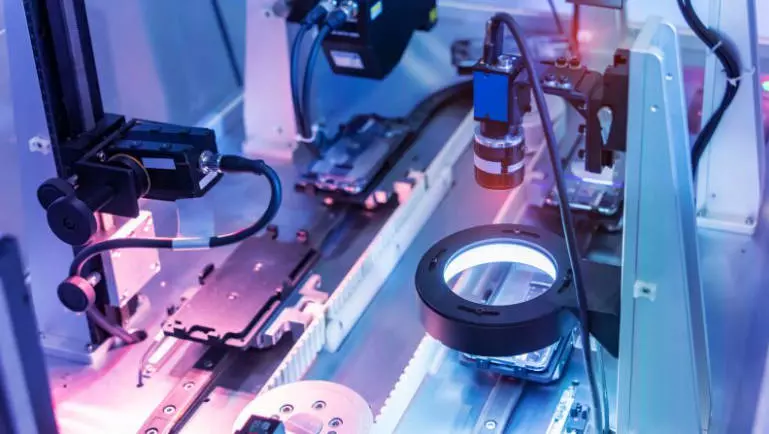
Artificial intelligence serves as the critical enabler bridging open ecosystems and localized capabilities. AI integration in modern CNC systems manifests across multiple dimensions: intelligent toolpath generation that optimizes for both speed and tool life, computer vision systems for in-process quality inspection, and machine learning algorithms that predict maintenance needs before failures occur.
Open architecture platforms accelerate AI adoption by providing standardized data interfaces. When CNC controllers output consistent, accessible machine data—spindle loads, vibration signatures, temperature profiles—developers can create sophisticated analytics applications without reverse-engineering proprietary protocols. This data liquidity transforms CNC machines from isolated equipment into connected, intelligent manufacturing nodes.
For manufacturers processing high-value materials like aerospace-grade aluminum, AI-driven process control delivers measurable ROI. Real-time adaptive machining adjusts feeds and speeds based on actual cutting conditions, compensating for material variations and tool wear. The result: scrap rates below 0.5% even on complex components, compared to 3-5% typical of conventional approaches.
Lastly, Building Resilient Manufacturing Futures
The dichotomy between open ecosystems and technology sovereignty presents false choices for strategic manufacturers. The most resilient operations will combine both: leveraging open, AI-enhanced platforms that enable continuous innovation while cultivating diversified supply chains that mitigate geopolitical and logistical risks.
As the CNC machine tools market grows toward the projected USD 196 billion valuation by 2034 , differentiation will accrue to manufacturers who master this integration. Whether sourcing precision components through global CNC import channels or partnering with emerging domestic providers, the fundamentals remain constant: demand architectural openness, insist on AI-ready infrastructure, and prioritize partners who demonstrate both technical excellence and supply chain resilience.
The factories that thrive in the coming decade will not be those who simply purchased the most advanced equipment, but those who built the most adaptive, interconnected, and strategically diversified manufacturing ecosystems. In an era of rapid technological change and geopolitical uncertainty, adaptability itself becomes the ultimate competitive advantage.
